


Caring For Handmade Stoneware
A study in preserving handcrafted vessels made to be lived with for generations.
"Take care of what has been entrusted to you."
— cf. 1 Timothy 6:20
✠
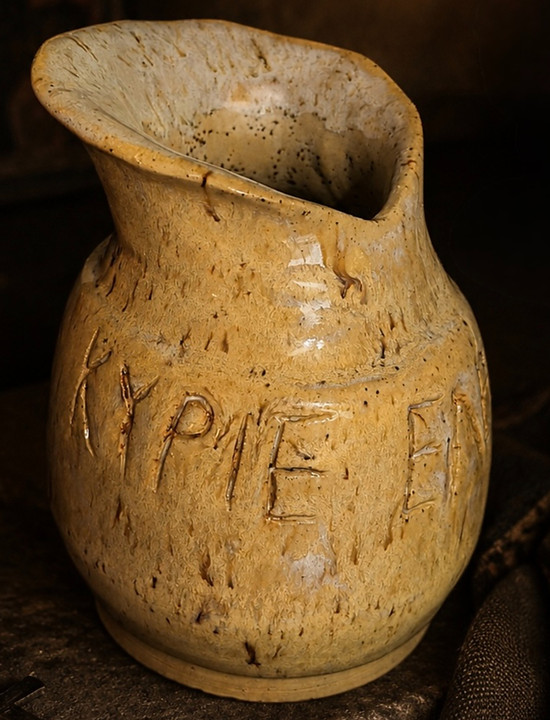
The Study
Built to Be Used
Handmade stoneware is not created to sit forgotten upon a shelf. It is made to be held, filled, shared, and lived with. Every vessel carries within it the marks of human hands, the discipline of craftsmanship, and the enduring strength of fire.
Unlike disposable objects, handmade stoneware invites daily use. Morning coffee, the evening meal, or a quiet moment of prayer all become part of the vessel's story. With thoughtful care, these simple moments accumulate into a lifetime of memories.
A handcrafted piece is not simply owned—it is accompanied.
✠
Remarkable Strength
Stoneware is among the strongest ceramic materials produced for everyday life.
Fired at temperatures exceeding 2,100°F (approximately 1,150–1,300°C), the clay transforms into a dense, durable body that resists moisture and withstands years of regular use.
Its strength, however, should never be mistaken for indestructibility.
Like all fine handcrafted objects, stoneware rewards careful stewardship. A moment of attentiveness preserves years of faithful service.
Its endurance is one of its greatest virtues.
✠
Simple Daily Care
Caring for handmade stoneware requires very little.
Wash with warm water and a mild dish soap.
Allow the vessel to cool naturally before exposing it to sudden temperature changes.
Although many stoneware pieces are dishwasher safe, hand washing remains the gentlest way to preserve the richness of the glaze and the subtle beauty of handcrafted surfaces over many years.
Simple habits quietly preserve extraordinary craftsmanship.
✠
Honoring the Handmade
Every handmade vessel bears slight variations.
The movement of glaze.
The softness of a carved inscription.
The character of the clay.
These are not imperfections to be corrected, but signatures of the maker's hand.
No two firings are identical.
No two vessels will ever be exactly alike.
These quiet differences are what distinguish handcrafted work from mass production and remind us that every piece possesses its own individual character.
✠
Made for Generations
Throughout history, ceramic vessels have remained among the most enduring objects created by human hands.
Many survive centuries after their makers have passed, carrying with them the stories of families, meals, celebrations, and daily life.
While every object will naturally show signs of faithful use, proper care allows handcrafted stoneware to become something more than functional pottery.
It becomes an heirloom.
One generation places it upon the table.
The next remembers who first held it.
✠
Frequently Asked Questions
Is handmade stoneware durable enough for everyday use?
Yes. Properly fired stoneware is exceptionally durable and designed to accompany daily life for many years.
Why are there small differences between handmade pieces?
Variations in glaze movement, carving, texture, and color are natural characteristics of handcrafted work. They are evidence that each vessel was individually made rather than mechanically reproduced.
Is hand washing recommended?
Yes. While many stoneware pieces can withstand a dishwasher, gentle hand washing is the best way to preserve the beauty of handcrafted ceramics over generations.
✠
Closing Reflection
The finest handmade objects ask very little of us.
Only that we use them.
Care for them.
And allow them to become part of the ordinary moments that quietly shape a lifetime.
Perhaps that is why handcrafted stoneware endures—not because it resists time, but because it is worthy of passing through it.
✠
Continue Your Study
The Journey of Clay → Being Curated
Wheel Throwing → Being Curated
Glazes & Fire → Being Curated
Explore the Gallery
From the Curator
A curated collection of studies preserving Orthodox tradition, sacred craftsmanship, and the timeless beauty of Christian heritage.